Birds do what human beings can only imagine – fly. Besides, nature has endowed them with quaint features, contrasting colours and singing tunes that fascinate our eyes and ears. Yet common birds and their interesting ways do not quite get the attention that they deserve. I did not care to see them either until recently I became interested in photography and captured them in my camera.
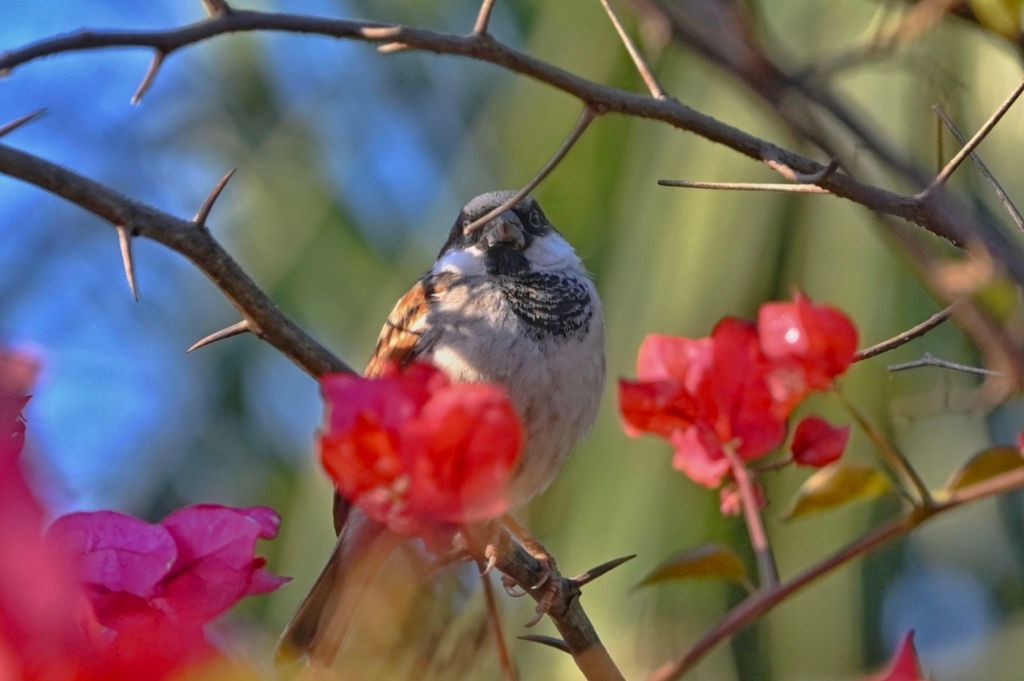
Sparrow perching Bougainvillea tree
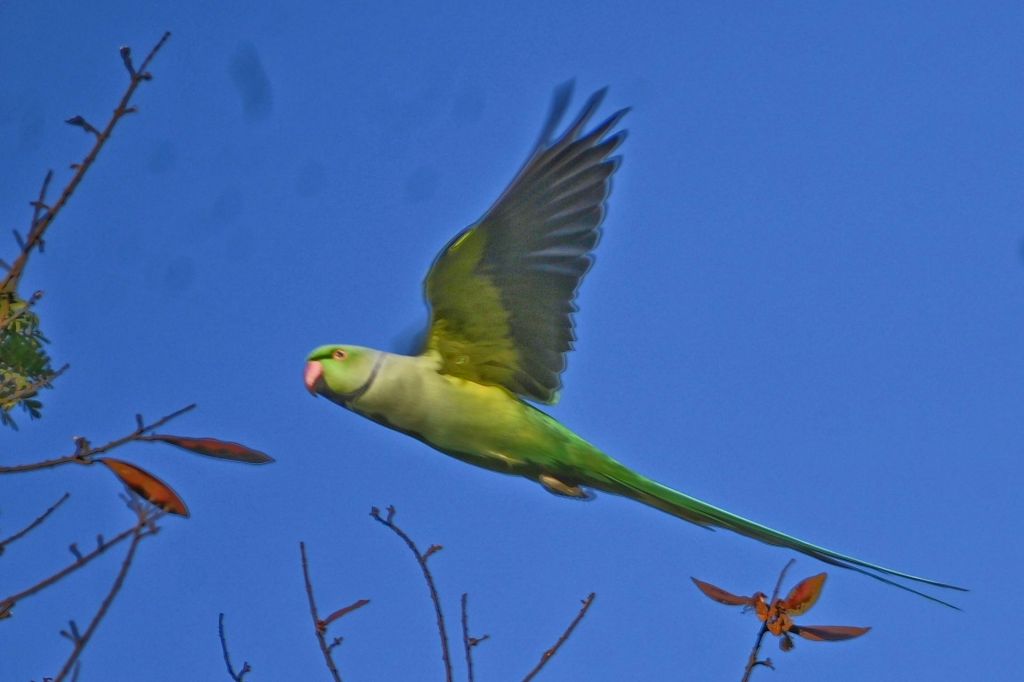
While photographing them, my eyes opened to their joyous ways of flying from one branch to another. Taking off needs effort and the birds flutter their wings, but going some distance, they glide, using the momentum and again work their wings to reach the destination. Sparrows, sunbirds, black drangos, silverbills and green bee-eaters perch on the branches for a short moment of rest. It is in those short whiles that I direct my camera, focus on them and quickly press the shutter, or else they would quickly move to another place and disappear. But interestingly, they would return to the same place after some time. So I stand there with my camera, waiting patiently, ready for a click.
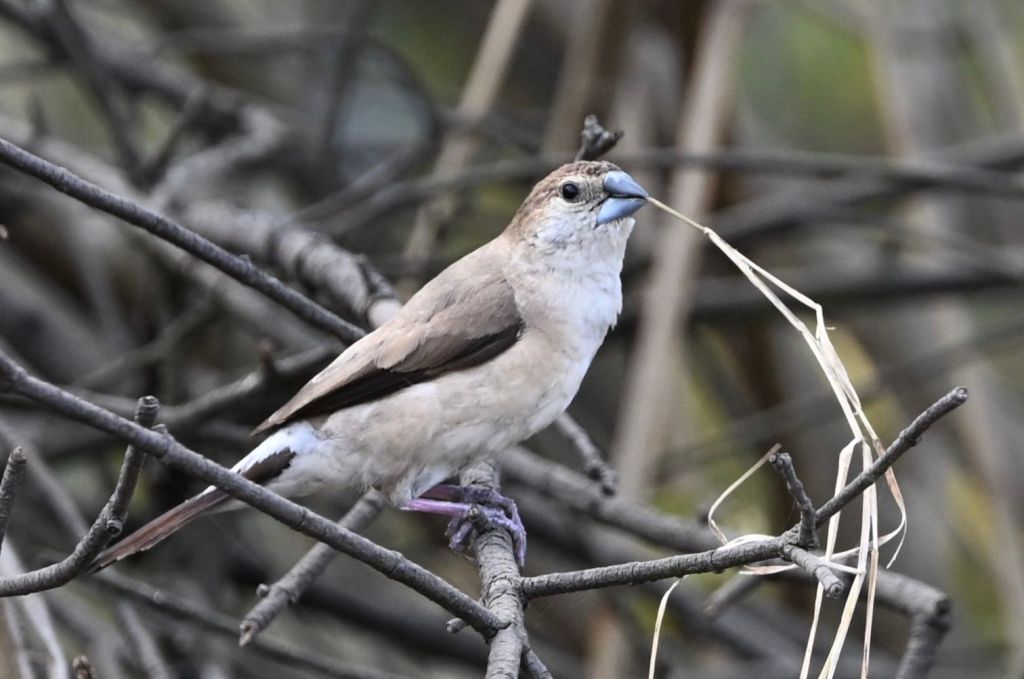
Silverbills collecting straws for nests
Birds love open spaces in the jungles where they fly from one place to another, unhindered. It is here that they spend time and engage in conversations with each other, settling atop or on the branches of the trees. These are also the moments when snapping them results in sharp images, leaving the background blurred.
Birds build their nests and take care of their young ones in cozy homes. I often see them carry straws to build their nests or grub in their bills to feed their young ones. Multiple sorties are undertaken to collect enough materials for their cozy nests or food for the chicks.
A parrot flies on the top of a tree
What is near and common is often ignored as if all interesting things have to be exotic and happen only at a distance. But doing photography, I discovered that looked at closely, common birds are amazing subjects for pictures. Chirping of birds is pleasing to our ear and indicates their presence in an area. Whenever I pass by the woods and hear birdsongs, I pause for a moment and take a look at them. Their existence confirms that the environment around us is healthy and life goes on around us, whether we see it or not.
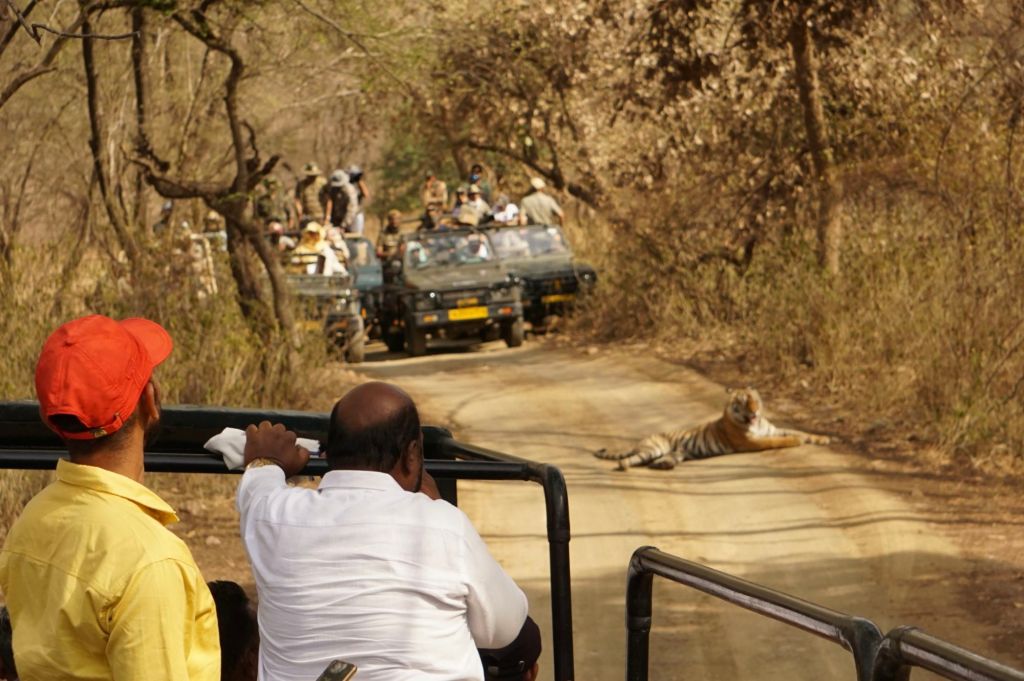
In a forest, tigers are only expected to be beside the trees, in the meadows, caves or maybe in and around water bodies, and tourists have to widen their eyes a bit to discover the big cats in the inner recesses of the forest. And the sighting happens only occasionally. So when on my last safari into the Ranthambhore Tiger Reserve, the safari canter carrying us, the tourists, bumped into a tiger resting on the route, it was a reward beyond expectations!
Ranthambore Zone 2
At Ranthambhore Tiger Reserve, the part of the forest open to tourism is divided into five zones: zones 1, 2, 3, 4 and 5. It was on a hot afternoon of April that our safari canter entered the zone 2 and had to stop, seeing other tourist vehicles stranded there. A young tiger stretched itself in the middle of the road and was in no mood to leave. I brought out my camera, clicked just enough photos for remembrance and was done with it. So did the other tourists as the tiger turned to its left and to its right and then towards us to have a good look at the tourists.
The tiger looking at the tourists
Half an hour had passed and we had the rest of the zone 2 to see within four hours of the evening safari. But the tiger kept us guessing about how long it would be lying on the road. The tiger seemed to assert that we were in his territory and he would move as and when he pleased! The tourists kept quiet, waiting for the tiger to clear the road at its own sweet will.
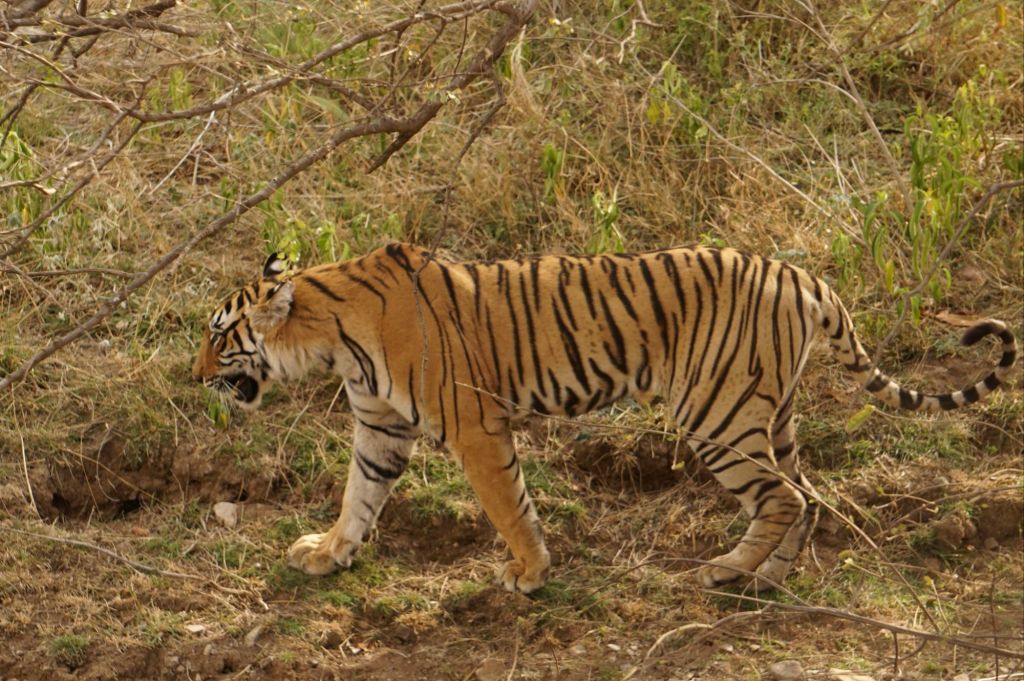
It was almost after an hour that the tiger rose from the ground and walked down in lazy steps to a waterhole nearby and sat on the water to cool itself.
Tiger walking down to a waterhole
Being nocturnal, tigers spend most of the day, sleeping or resting in the shades after ensuring that no one from their own community was encroaching on their territories. No worries as others pose no threats to them. The tiger chose the comfort of soft sand of a safari route for a siesta perhaps after a heavy lunch. But it was all good for us, the tourists, or else we would have had to strain our eyes looking into the forest and having only a glimpse or more often return home disappointed without sighting any one of them. We were so ecstatic and thankful!
Away from the human world, sheltering a wide diversity of species in their inner recesses, forests inspire unbound human imagination, wonder and curiosity. People flock to the jungles to explore the sights and sounds of nature’s wonderful creations – seeing a lion or a tiger roam in the wild, hearing their roars or listening to the songs of birds can be the experience of a lifetime.
I was at Bandhavgarh Tiger Reserve in central India in January this year. It was on a cold morning that I reached Umaria, which is the nearest railway station to the reserve, and took a bus to Bandhavgarh. The road from Umaria cuts through the forest and leads to Tala, a quaint little town at the other end, where the tourism offices and safari zones are located. As the road stretches ahead, the town widens and accommodates the lodges and resorts for the tourists right up to the edge of the jungle.
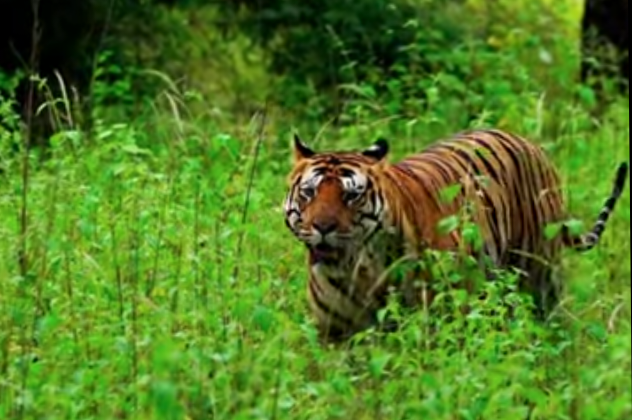
Bajarang the tiger (from MP tourism YT video)
Staying at Tala for two nights, I made three safaris into the core tiger zones of Tala and Maghadhi. Bandhavgarh is a lush forest of sal, teak, bamboo, peepal and other varieties of trees, interspersed with wide open grasslands. The forest starts from the edge of the town, hardly one and a half kilometres away from where lives a large male tiger, Bajarang. On day one, the safari jeep took me and my fellow passenger, Benzamin, through the entry gate into the undulating landscape of Tala Zone.
The vehicle went gliding up and down the wavy road and soon we were into the territory of tiger Bajarang. There are about 135 tigers at Bandhavgarh according to the census by the National Tiger Conservation Authority and only those along the safari routes are affectionately named by the forest department. The guide showed us the deep scratches the tiger made on the trunk of a tree to mark his territory. Tigers establish their territories to secure the supply of food, and every tiger has a kingdom of his or her own. We drove through Bajarang’s territory, but the tiger did not show up. His area is spread far and wide from the safari route – understandably, he was on the prowl for a kill or resting in a cave or courting a tigress.
Safari jeeps with tourists, many of whom were foreigners, were zipping to and fro, looking for the majestic animal. Had the tigers known of this craze, perhaps they would have done catwalks before every safari jeep and become ultimate style icons! But the royals are their own selves, wild, elusive and uncaring of any human attention.
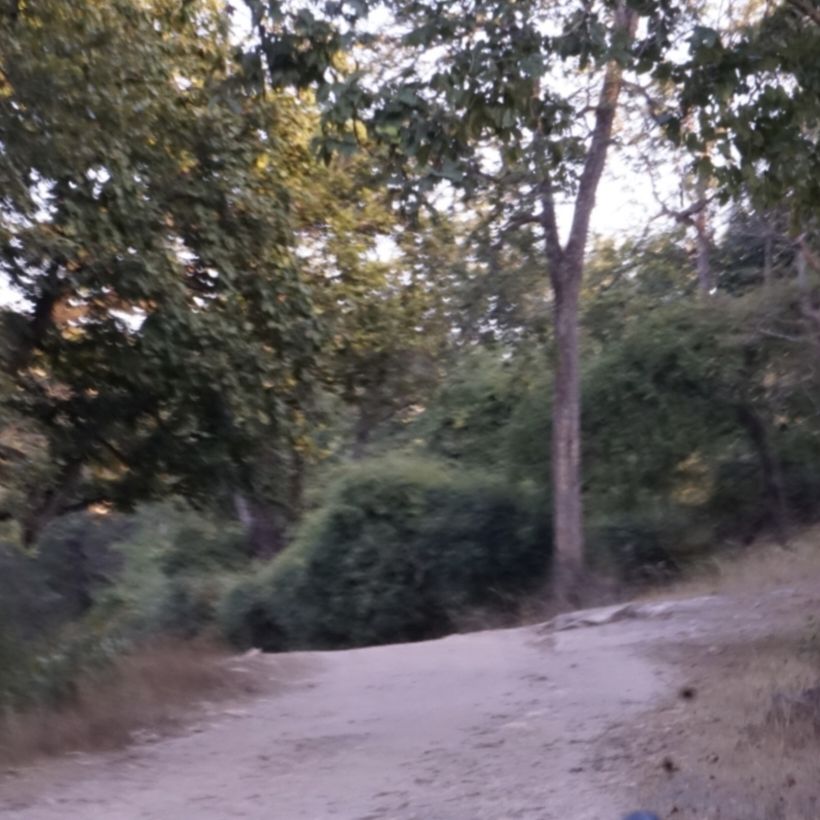
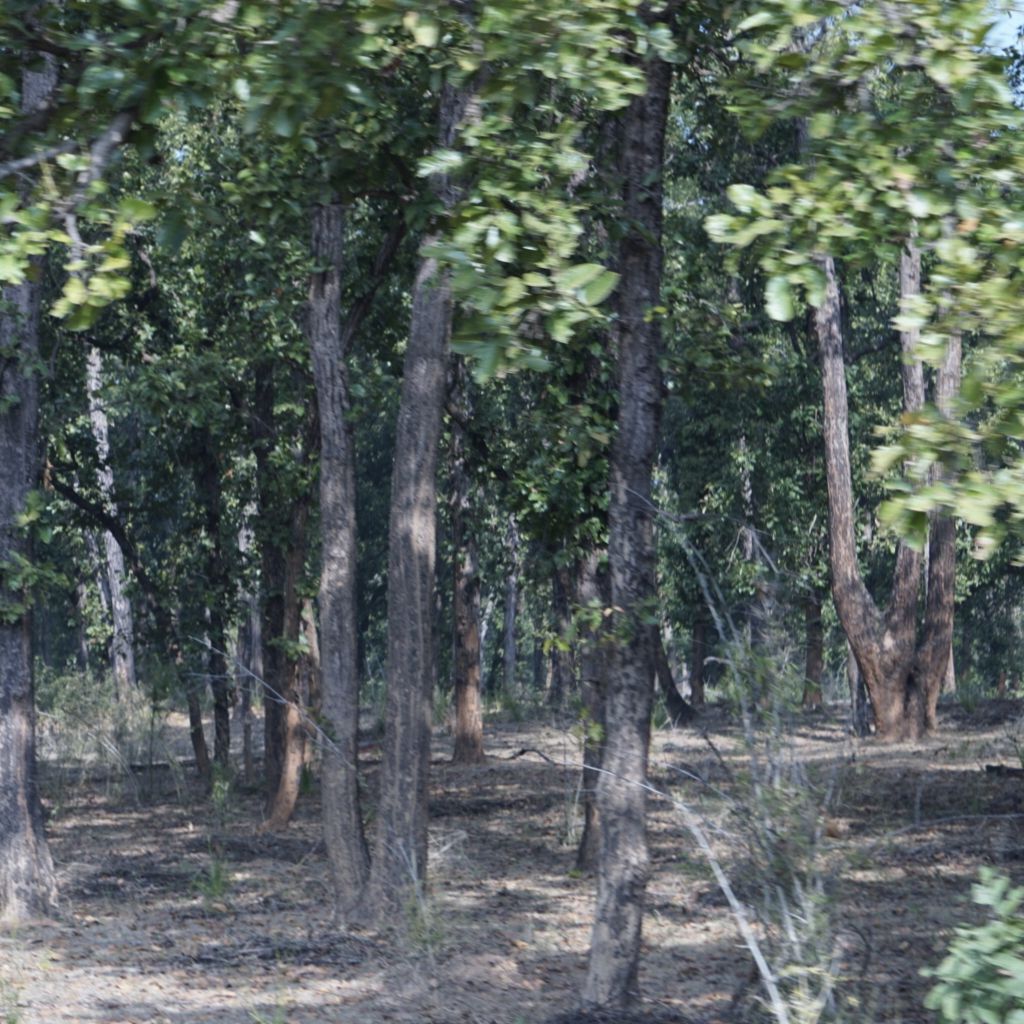
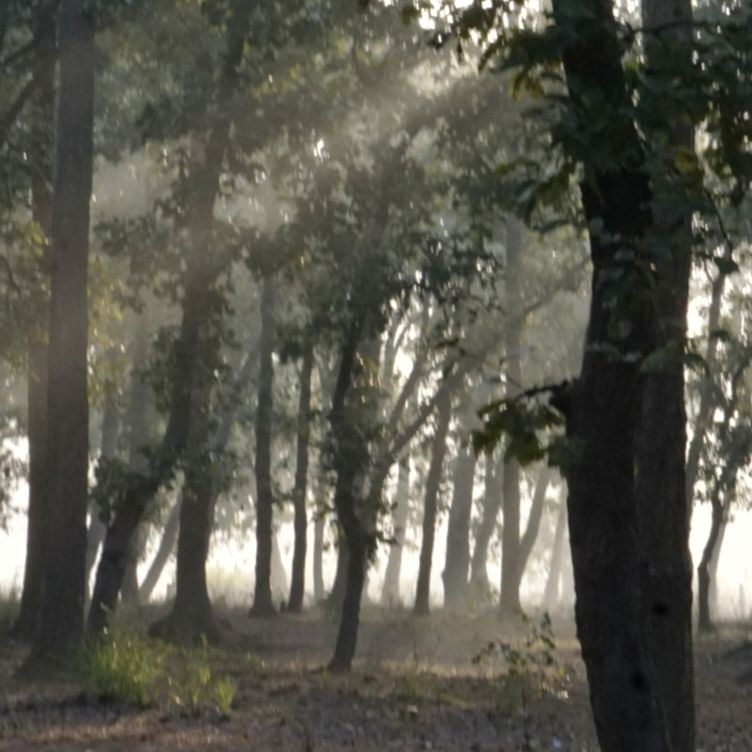
The jungle in the morning (captured in my camera)
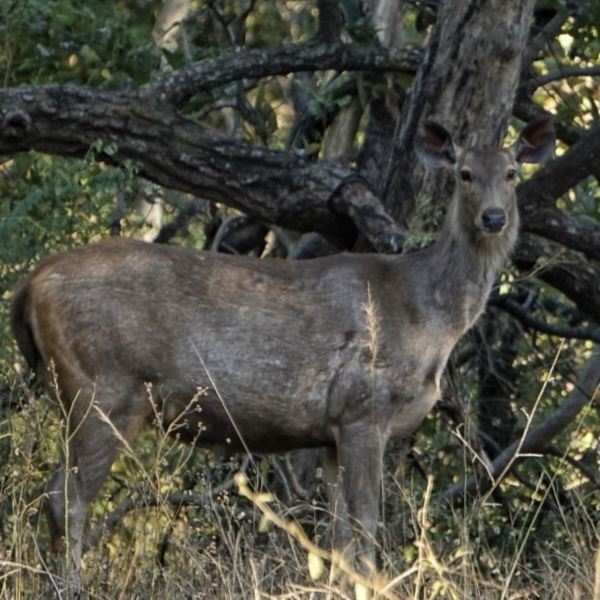
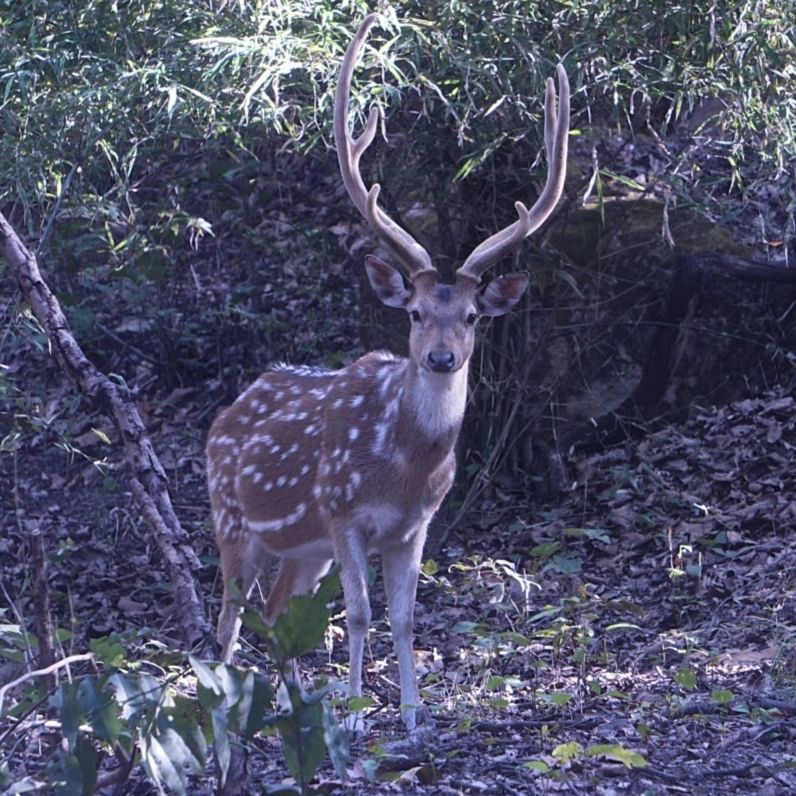
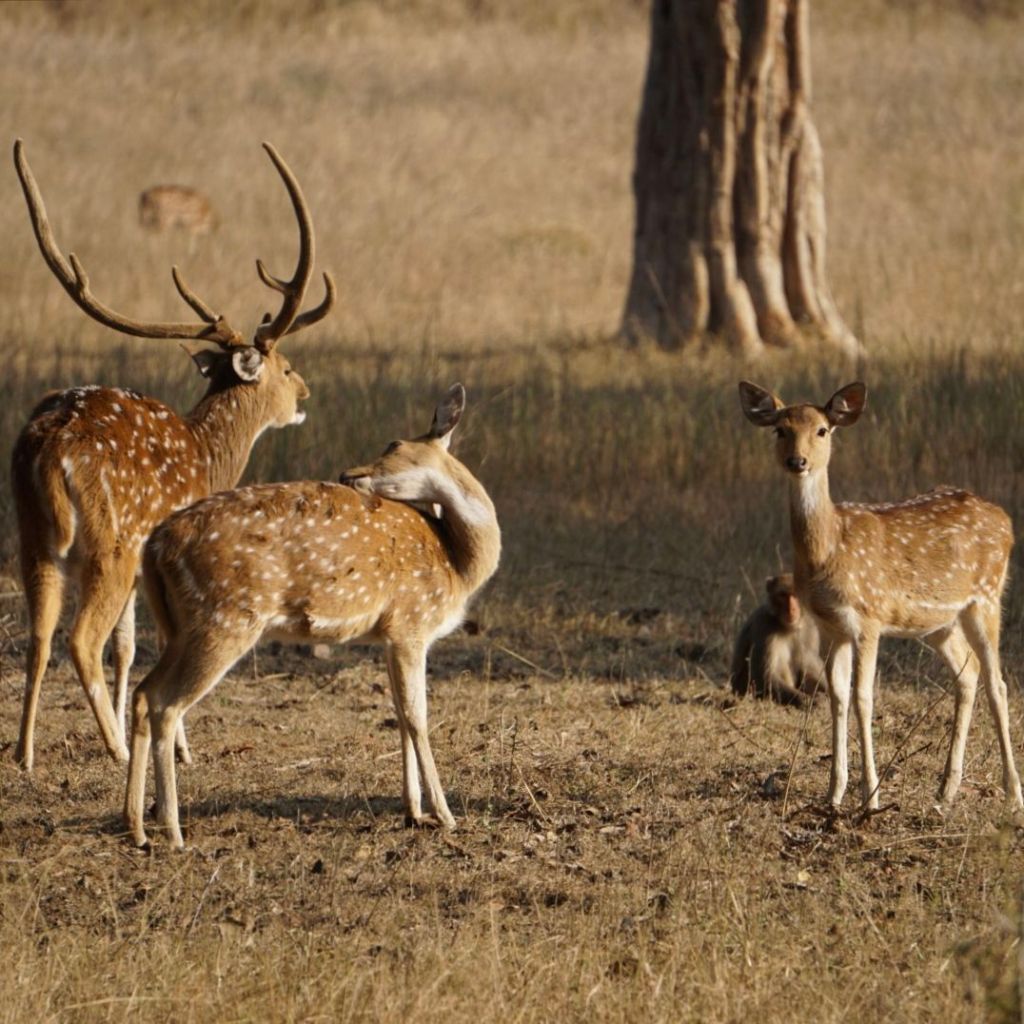
On the way further, however, spotted deer (chital), sambhar and bisons were slaking their thirsts in the streams while some stood looking at us quizzically, their ears upright. Thankfully, their abundance ensures that the tiger Bajarang, staying so close, is no threat to the humans in Tala Town.
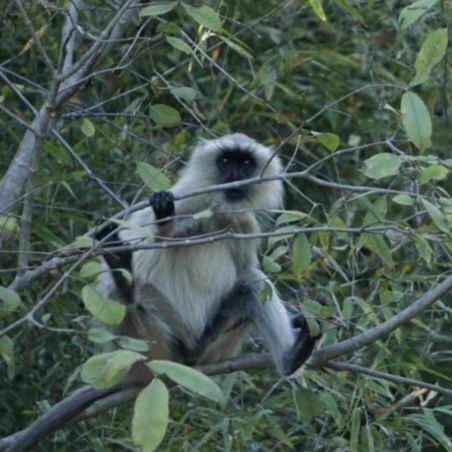
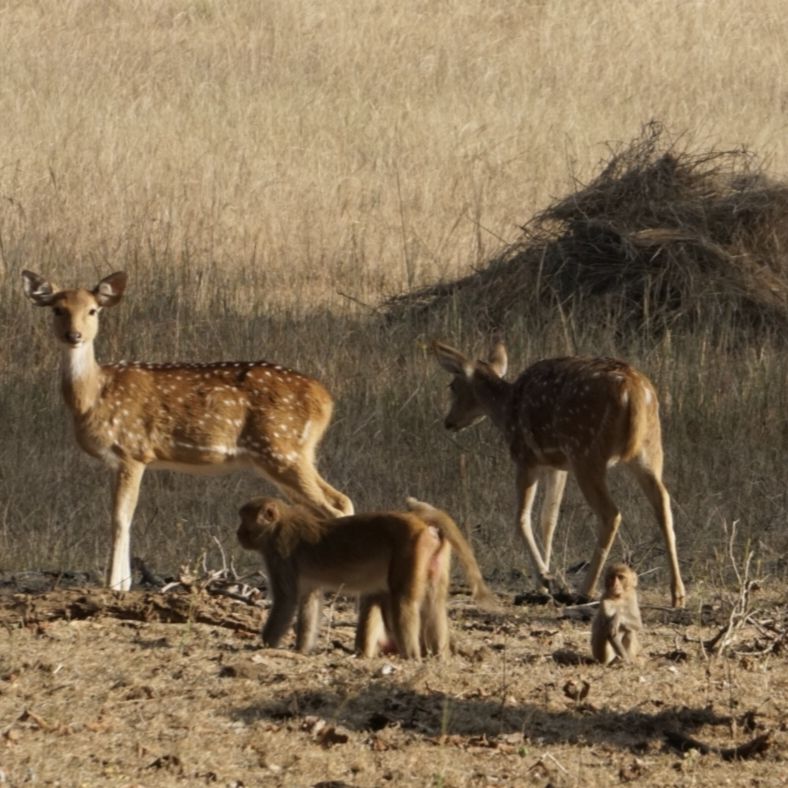
Monkeys hung from the branches of trees as usual – they are the ones who shuttle seamlessly between human habitat and the wild! Extremely agile, intelligent and athletic, they can climb to safety at the slightest hint of trouble and make fools of both humans and tigers! Being vigilant, however, while in the jungle, they partner with the deer and roam together, alerting each other of the movement of predators.
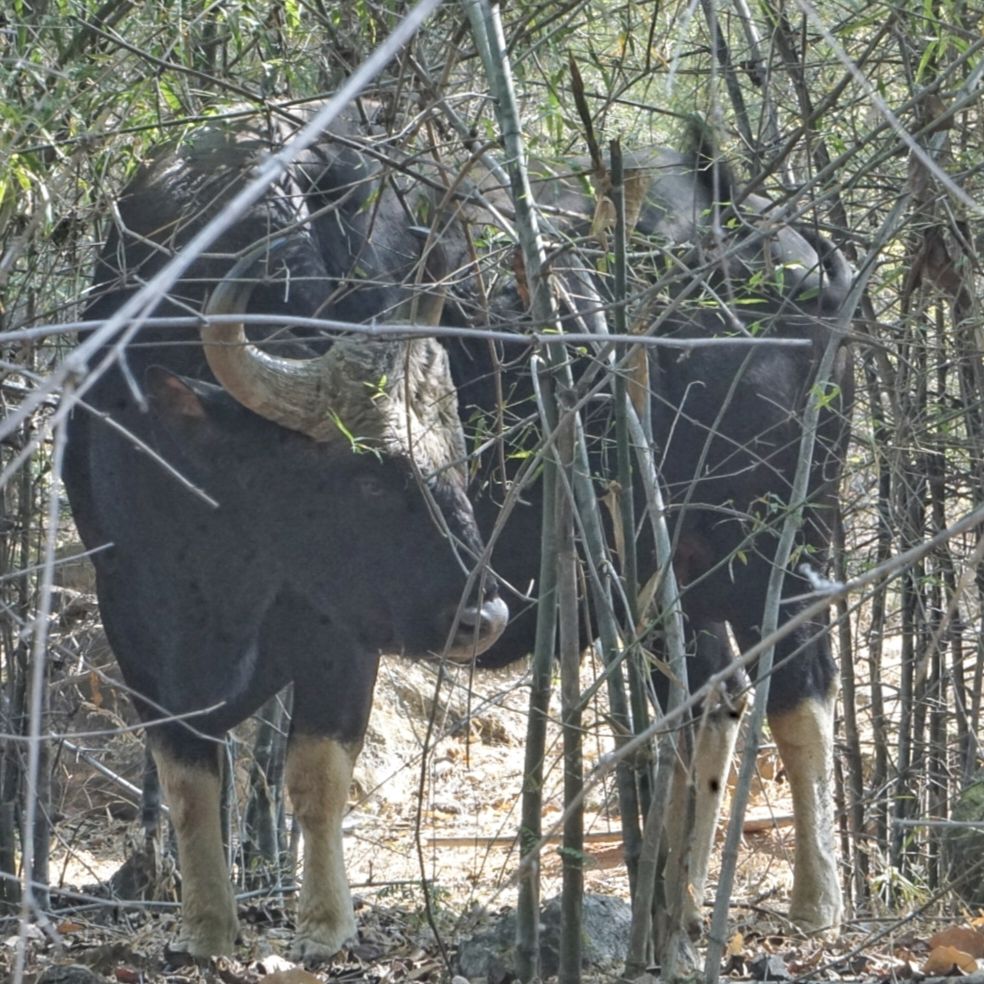
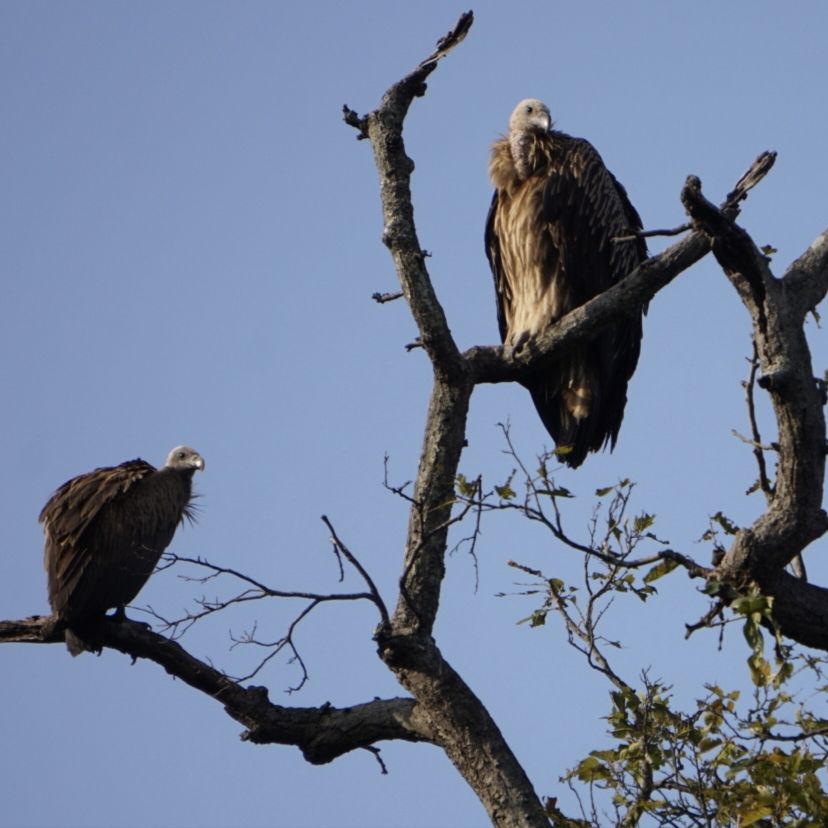
Animals roamed free and uninhibited – a jungle fowl behind a bamboo thicket, a spotted owl nesting in a tree hole, a malabar hornbill on the top of a tree, a jackal suddenly appearing and slinking away and a bison calmly feeding on leaves of a tree perhaps feeling a little safer because of its size. Two vultures perched on the top of a tree and from their lofty vantage point must be looking for the carcasses of animals to feed on.
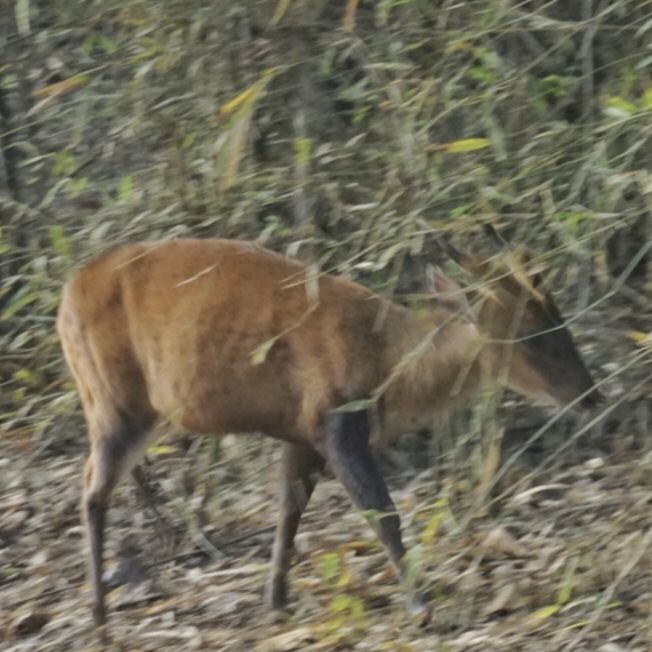
Sambhar, Bison, Barking Deer, Vultures (captured in my camera)
The jungle has undergrowth in parts and only a cover of grass elsewhere under the woods. And deep inside, there is a lake and beside it meadows of elephant grass where herbivores graze and tigers hunt by ambush.
January was unusually cold this year. On day two, again at Tala Zone, the morning was misty, reducing the visibility, but once the mist cleared, sunlight passed through the gaps between the trees. The safari jeep was ascending the hills in Tala Zone and on the ascent, we viewed the entire canopy of the jungle and also found stables for horses. Humans are no strangers, after all, to the tigers of the forest, the only difference being that earlier they roamed on horseback and now on safari jeeps.
The vehicle took us up to Sesh Saiya, which is a reclining carved statue of Lord Vishnu at the top of the hill. Bandhavgarh Fort, which is now abandoned, was within a short distance but the entry to it was prohibited. The fort was built about 2000 years ago on the top of the hills, giving the king’s army the advantage of the height as also the cover of forest roamed by deadly beasts. The jungle derived its name from the fort.
Monkey – Deer friendship (captured in my camera)
India is a land of tigers, and the kings of the good old days have had a strange relationship with the kings of jungles. Hunting expeditions by the rajas (kings) and at the same time the conservation of the species are part of folklore in India.
My last safari was to the Maghadhi zone a little far from the Tala Office. This part of the forest is in plains unlike the hilly Tala Zone. Early in the morning, call of barking deer was heard very prominently and safari jeeps rushed to the spot, but no tiger could be sighted. Blue bulls (Nilgai) were grazing far away and a sounder of wild boars went, grunting along the way as usual. Tiger’s pugmarks were found in the safari routes, indicating their overwhelming presence in the forest. It is only a matter of chance that the tourist vehicle passes by exactly at the time the tiger roams near the safari route.
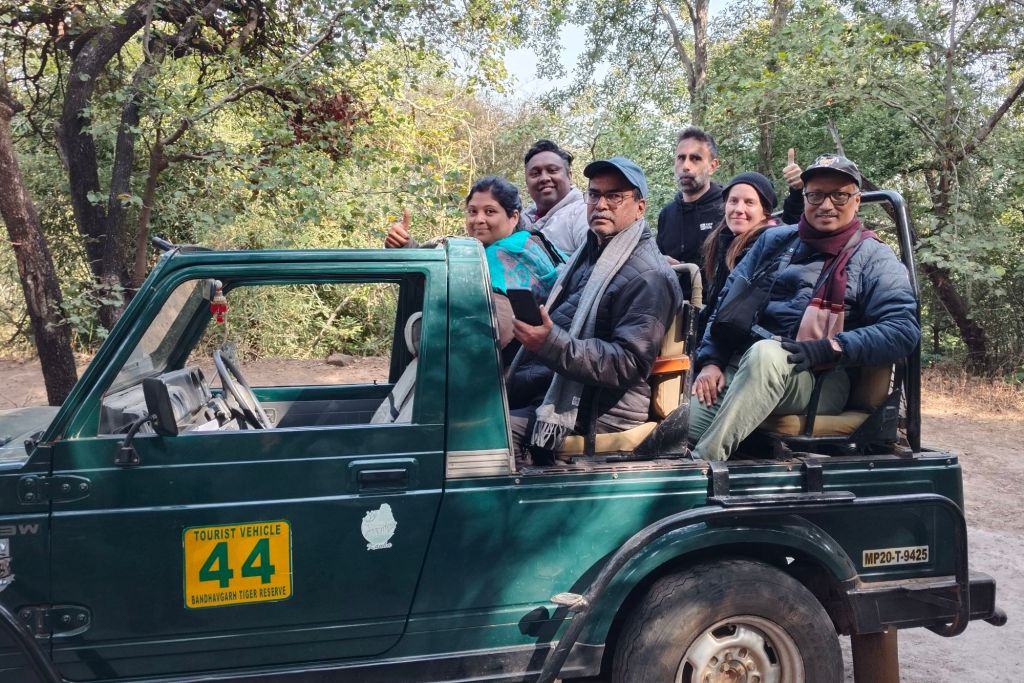
Apart from having an intense wildlife experience, I had the pleasure of meeting tourists and wildlife enthusiasts from around the world. I met on my safari rides Benzamin, a French national, and a Spanish couple, who came to Bandhavgarh, after visiting Kanha Tiger Reserve. Two Bengali families from my home state West Bengal accompanied me into the forest and then were off to Kanha and Pench Tiger Reserves. Their wanderlust was refreshing, and meeting them only pushed my enthusiasm for wildlife up a few notches. I did not spot a tiger this time – hopefully my wish will be fulfilled in my next visit to another forest.
Our Safari Jeep
Teashops, souvenir shops and cloth stores were on both sides of the road in Tala Town, and the artefacts, painting and clothes being sold were all about tigers. The shopowners and taxi-drivers with whom I interacted were supportive of wildlife, emphasizing that tigers had caused no harm to them even when they were occasionally out of the forest.
A forest has a huge significance for the environment, wildlife, history, economy, tribal life, tourism and literature, and can be looked at with as many perspectives. As a tourist and a wildlife enthusiast concerned about environment, however, I was happy to find all these resonating well through the wild terrains of Bandhavgarh.



 Trickles of Tales