Hyderabad – The City I Have Seen Grow

A tour of Hyderabad takes hardly a few hours but can give one a heady feeling of having a purportedly long travel in time! The city’s old and new landmarks are so vividly representative of its past and present that one would be deeply engrossed in studying them during their visits. While the ruins of Golconda Fort and the Charminar would transport one 433 years back to the city’s origin and the days of the Sultans, the multinational IT company offices, multiplexes and skyscrapers would return them to its present, also giving a glimpse of its future.
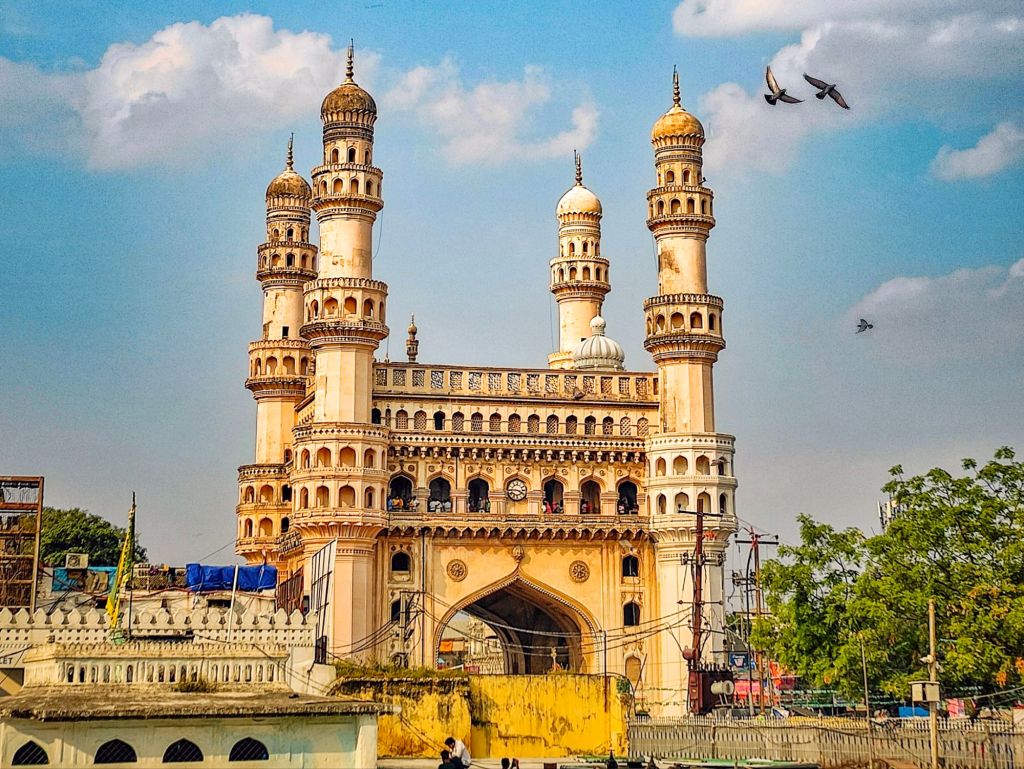
The Charminar built in 1591 (pc : http://www.unsplash.com)

Indeed Hyderabad has travelled a long history since its beginning in 1591 and is today a rare combination of heritage and modernity. The city has seen the rise and fall of the Sultans, the Nizams and the present day rulers, but nevertheless it has continued to have their patronage and grow.

It was in 1996 that I came to the city to join a manufacturing company as an engineer. Before that, Hyderabad meant to me Biryani, the Charminar, Telugu cinema and Mohammed Azharuddin, who was then the captain of Indian cricket team. Food, heritage, cricket and cinema still define the city, but it has since outgrown its old identity and added new feathers to its crown. Huge investments in IT, pharma, infrastructure, health and real estate have delivered an incredibly fast growth for the city and made it a destination for education, health care and economic opportunities.

I have a fond remembrance of the city that was 25 years ago. Nostalgia is a strange feeling of yearning for return to good old times. People wax eloquent about the days of their childhood and youth – about their early experiences with worldly pleasures, friendship and heroics, unburdened by the responsibilities of life. The world changes for the better or the worse, but the bygone time retains its charm and old memories inspire enthusiastic story-telling.

Hyderabad was established on the eastern bank of the river, Musi, in 1591; the area is now known as the old city. The city expanded to the other side of the river and Secunderabad was established close to Hyderabad in 1806 as the cantonment area for the British. 25 years ago, the old city and the part of Hyderabad and Secunderabad with the state’s administration, shopping centres, stadiums, railway stations and airport were what we called the city. The satellite towns such as Kukatpalli, Lingampalli and Patancheru were part of greater Hyderabad but not contiguous to it, separated by barren lands, lakes or bushes on both sides of the road.
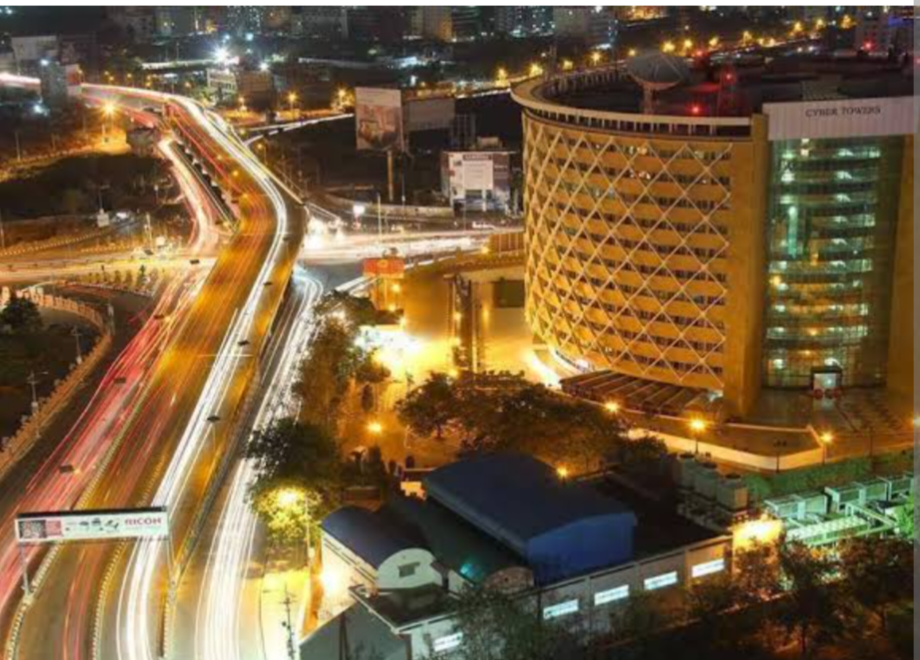
The Cyber Tower and the city around

I settled at my office township at Lingampalli from where going to the city was a bus ride of forty-five minutes. A trip to the city for shopping, watching movies, having lunch or attending a function was a sort of an event to plan for, celebrate and then discuss with friends. There are go-to places such as Paradise Restaurant, Lifestyle, Shoppers Stop, Shopping Centres at Koti and Sangeeta Theatre. Now those needs can be fulfilled at Lingampalli and nearby towns, and except for special purposes, there is no need to go to the city, wading through traffic and getting stuck in traffic jams.

Information Technology was just beginning to flourish in the late nineties and the then Chief Minister Chandrababu Naidu was showcasing Hyderabad as a destination for investment in IT industry. Cyber tower at Jubilee Hills was the first building for IT company offices at Hi-tech city, which has gained an iconic status now. Investments gained momentum quite fast with IT, pharma, bio-tech industries setting up offices at Hyderabad. World class infrastructure such as Metro Rail, Outer Ring Road, a new airport and a new Cricket Stadium have been built and the city has got an Indian Institute of Technology. India has experienced phenomenal economic growth in the last two decades and there is development more or less everywhere but Hyderabad has taken greater advantage of it than many other cities.

As a common man, I was in awe of what was happening around. Twice or thrice every six months, whenever I drove down to downtown Hyderabad, I would see pits dug up for new buildings there. In another six months, when I went through that location again, a new apartment or shopping mall would be standing there above my head. Thus, the spaces between downtown Hyderabad and satellite towns like Lingampalli have been filled and the city now stretches seamlessly to Lingampalli and beyond with shops and residences on both sides of the road.

Single lane roads have been widened and converted to double lane and new flyovers have come up to reduce traffic jam. It is now difficult to drive to the other lane of a road with a long way to go for a U – turn and one has to be cautious about taking the right route or right flyover as a mistake would punish you severely by taking you a long distance before coming back to the right track. The lakes have been encroached upon and reduced in size to make way for new housing projects.
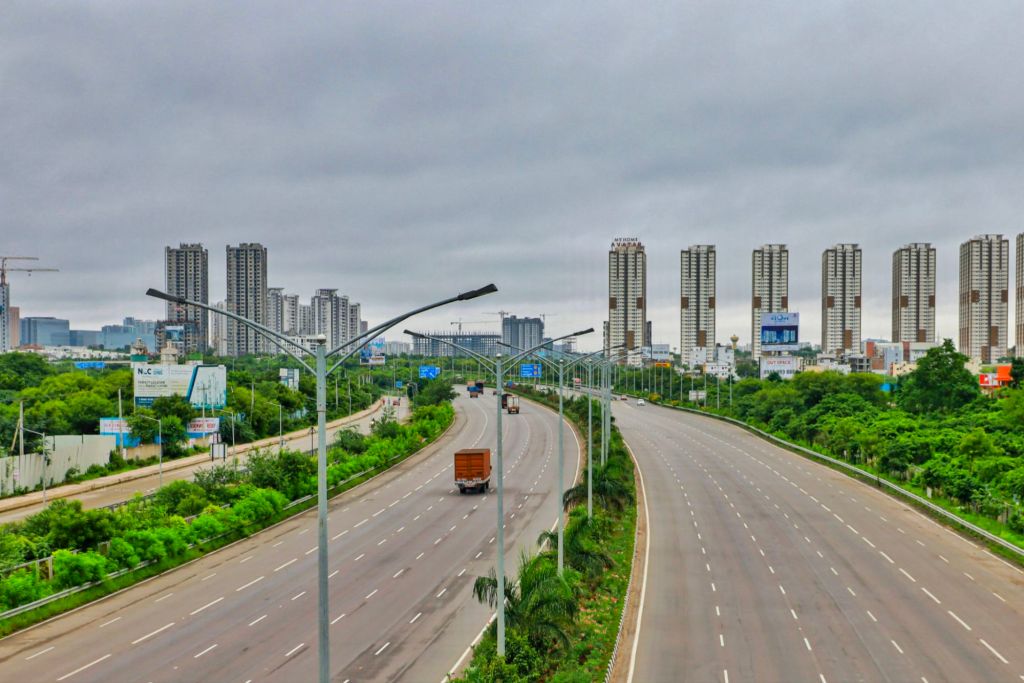
Developing Infrastructure of road and real estate

Development has also penetrated into villages like Gopan Palli where I used to go for a drive in the countryside. 20 or 25 years ago, one or two apartments tried to come up but failed perhaps because they had no takers. Their abandoned look convinced me that this part would not see development in the next hundred years. Oh my God! An apartment named Aparna Sarovar came up first and then new buildings, hospitals and shopping malls have sprouted up altogether like mushrooms and the place where no souls could be seen after sunset are now abuzz day and night with traffic and crowd.

A few kilometres away,  entrepreneur Ramoji Rao developed a film city in the nineties, which is now the largest film studio in the world.

In a globalized world, however, there is homogeneity in development and looking at the architecture of office or residential buildings and complexes, I cannot differentiate between the modern part of Hyderabad and any other cities like Kolkata, New Delhi or Bengaluru. But old Hyderabad continues to exist in its heritage, in the giant old rocks which have been standing there since the age of dinosaurs and in the simplicity of its people.

Modern cities are vehicles for fulfilling people’s dreams of being successful in education, jobs, business and having better quality of life, and their importance is judged by the opportunities they create in economic, educational, cultural, health care and other spheres. In these terms, the facilities created in Hyderabad in the last two decades will give it mileage for a long time to come. But unplanned development often leads to problems such as traffic jams, pollution, shortage of water supply and flooding during rains. The city’s planners need to keep these aspects in mind while further developing and managing the city.
Morning Walks through BHEL Township

A cock welcomes the morning by crowing  while a crow starts cawing right from the wee hours of the day. And as the day dawns and the sunlight hits the tops of the trees, the entire bird community wake up, flutter their wings, fly from one branch to another and chirp endlessly till the evening. Dogs roam the streets and engage in mock fights with each other.

A human can do many things. But perhaps the best way to greet the magical new morning and start the day is to go for a walk. A walk in the morning presents us with a view of nature, of the rising sun and the comfort of empty streets free from traffic, crowd, noise and dust. I have been doing this for years and do it now even with greater energy and enthusiasm.

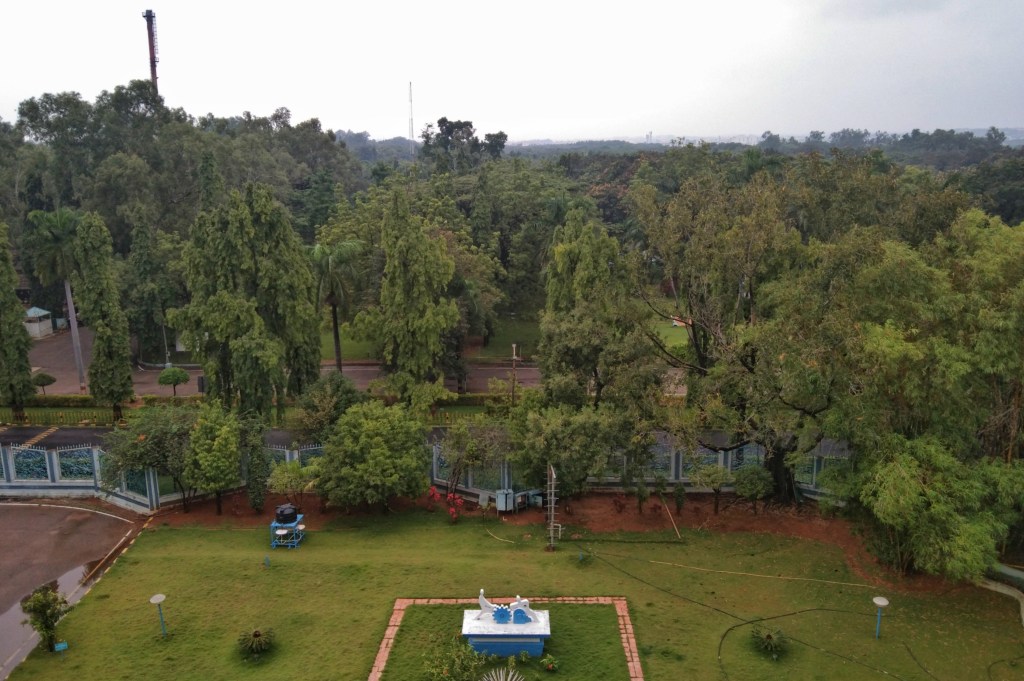
Thick canopy of green over BHEL Township

Ideally, morning walks need to be done in peaceful places like parks or streets under cover of trees. In today’s vertically growing cities or gated communities, walking spaces are  created by beautifying the streets with decorative plants, building parks, walking tracks or even skywalks on the terraces of multi-storey buildings – the architecture weaves walking spaces into all modern necessities of life.

However, for me, the township of BHEL – the company that I work for – offers a wide network of streets, natural green cover, the touch and smell of earth and an atmosphere of serenity for a morning walk. The township was built about fifty years back, covering an area of 16 sq km.

The township has everything that you ask for – school, college, stadium, library, club, temple, mosque, gurudwara, market, park, forest and what not, apart from the manufacturing factory. It is here that I spent a long time of my career. I live outside it now but have made it a habit to walk through it twice or thrice a week in the mornings.

Walking track inside township

The most alluring thing for me is the urban forestry around the township. The area was once a rocky terrain of Deccan Plateau, mostly barren with patches of green lent by shrubs and Palmyra trees. Human beings can do wonderful things – the barren landscape has now been converted into urban forestry. When I joined the company, trees were being planted. Now it is a grown up forest with peacocks crying, birds chirping and insects buzzing all the time.

Main gate of the township is quite far from my residence. The forest surrounding the township is near my home; so it is easy for me to enter the township through the forest, which, apart from being convenient, puts me on nature trail every morning. There are pathways made by people walking or cycling through the space between trees.

Going through the woods, I see peacocks and peahens roam and break into a short flight to reach the branches of the trees. There were  birds of all kinds – mynas, doves, cuckoos, kingfishers, cranes, Ibis, parakeets, coucals, etc. Sometimes, I carry my camera and try to capture them through my lens. The insects that remain invisible keep buzzing all the time, making the sound ‘zhi-zhi-zhi…’ from the boughs or the branches of the trees.

Morning walk through the forest

The narrow pathways through the forest meet roads inside the township. One day I walked up to the inner edge of the jungle and into a road inside and chanced upon an old colleague of mine who was a regular morning walker. He was surprised to see me suddenly appear out of the woods.
‘Where are you coming from?’ he asked.
‘From the MIG housing colony,’ I answered.
‘Where is the way to MIG here?’ he laughed at me.
‘Yes, there’s a way.’
‘I’m living here for a long time. I don’t know and you know.’
‘Let me see,’ he said and went to find the way through which I came out. Finding a pathway, he said, ‘Oh, this is the way for you.’

Township presents a wide panorama of scenes – you can have a glimpse of rural India in a crane taking a free ride on the back of a buffalo or a pack of dogs chasing pigs, or in contrast, a snapshot of an industrializing country in machineries manufactured by the company being transported in lorries out of the factory. The township gives people living near it the space to go for a walk or a run. They come to the township early in the morning to exercise their bodies by walking or running. Their enthusiasm is contagious! They infuse me with energy to walk longer distance.

Peacocks of the township forest

In the middle of the township, there is a stadium and a walking track surrounding it. Men and women, conscious of their health and determined to remain in shape, are seen to enthusiastically walk down the track. Their gaits are a study in contrast – the rhythms in their hips, legs and feet have a certain grace and leave signatures of their varied genetic make-up.

I happen to meet known faces while walking on that track. They greet me with a short ‘hi’ or a smile and move along while some look the other way and pass by without acknowledging me as if I will stop them and engage in a long conversation, upsetting their rhythms.

Township is for employees who live in quarters – medium quadruplex houses  for four families. Each of them, I know, can tell their own tales of joy and sorrows, endeavours and aspirations and their service in BHEL.

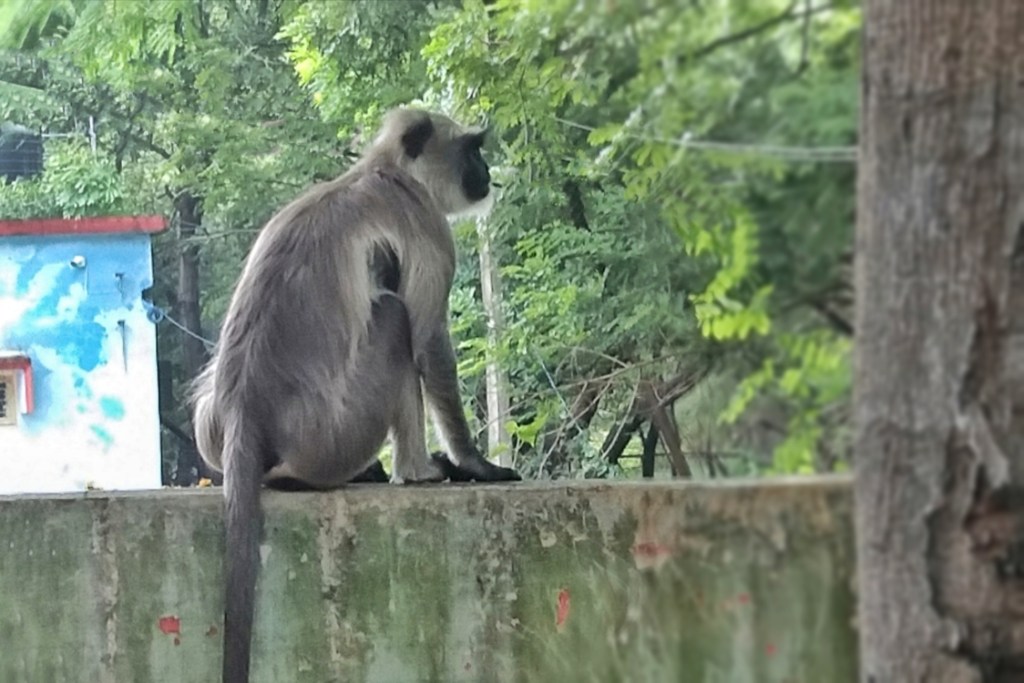
Township attracts visitors from the wild

Morning walks have been an integral part of life since my childhood. When I go on a trip to a hill station or any place to tourist attraction, I do it just for exploration. While exploring the nook and corners, I often hit the blind alleys. But on some occasions, to my surprise, I discovered hidden streams, tiny waterfalls or pastures of some kind.

On a daily basis though, BHEL township where I have spent a long time and of which I have seen enough holds an unending attraction for me. Entering it, I have an unmistakable feeling of coolness and freshness because the of trees and the shade they provide. This is just the kind of outing I need to do every morning to stay positive and energetic for the entire day.

Lift for Love – A Story

The newly built 15-storey building on the outskirts of Hyderabad had a rush of activities with families moving in one after another and occupying their new homes. With a truckload of their belongings, arrived on one fine morning a family of parents, their 20-years old son, Dev, and their German Shepherd, Zico. As the parents oversaw the unloading of the furniture, Dev went to the entrance of the building with the dog on the leash and started climbing up the stairs to reach their condo on the tenth floor. Zico loped beside him to keep pace with his long strides, panting.

The packers carried their belongings to their new home, set the cots, kept the furniture in place and left. The family had lunch and Dev had a good nap in the afternoon. In the evening, Zico started wagging his tail and growling and barking at his master. It was the time usually when he would take him for a walk. Today the dog was demanding this treat from his master more aggressively.

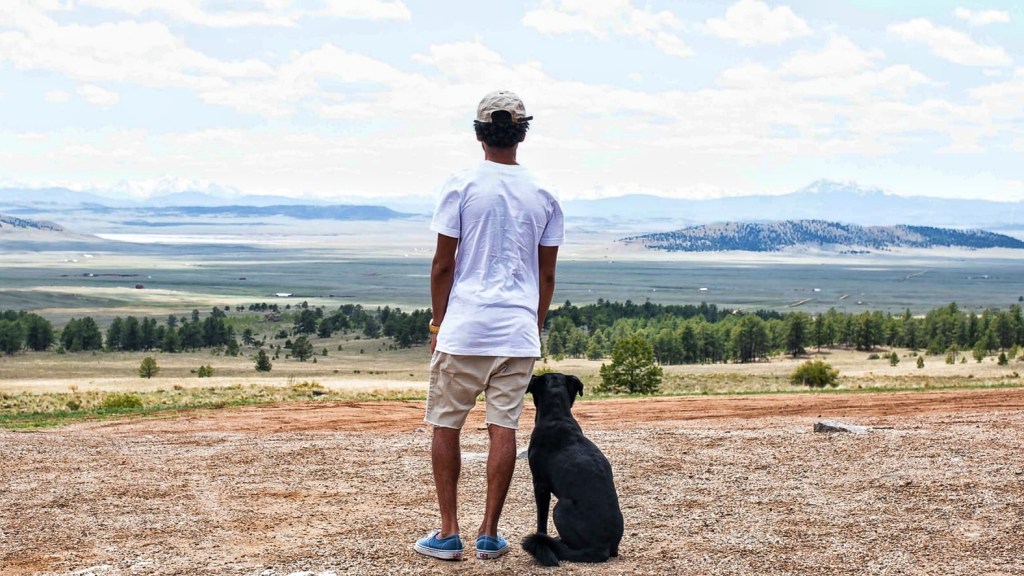
Representative Image (Picture Credit : http://www.unsplash.com)

Dev put Zico on the leash and took him out through the front door, holding the leash tightly in his hand. Going to the middle of the floor, Dev found that the lift was moving down fast from the fifteenth floor. He pressed the button, and within a few seconds, the lift came and stopped at the tenth floor. A girl of his age was standing there with a pug on the leash. She was tall, dusky and had nice flowing hairs. As the door opened, Dev smiled at her and entered the lift along with Zico. She smiled without raising her head, avoiding an eye contact with him.

Zico started growling a bit which frightened the dog. But Dev remained unperturbed, knowing that it was usual for his pet to show his superiority at every opportunity, which made him proud rather than concerned. It was all fine until a sudden power outage brought the lift to a complete halt just as it was about to reach the second floor! The lamp went off and it was little dark inside. Zico suddenly pounced on the pug and held it on its neck! Dev could not control him by pulling the leash. The little dog was traumatized! The girl picked up and calmed her pet by holding it close to her chest.

After a few minutes, the power was on and the lift started moving again. The girl pressed the button for the second floor, and as the lift stopped there and the door opened, she hurriedly went out with her dog, mumbling, ‘Savage! What kind of training has it got?’

The lift went down to the ground floor. Dev came out of the lift and stood in front of it for a while, expecting her to come down so that he could apologize, but the lift moved up to second floor and thereafter up again to the top floors. He was not at all happy about upsetting a neighbour and that too a pretty girl with whom he should rather make friends.

Dev went out of the complex with Zico. He shouted at the dog, ‘Who told you to attack the puppy? You’re a dog after all. A dog will forever be a dog. Your species can never be civilized!’ Zico cringed a bit at the sudden scream of his master whom he had never seen so angry. His master taught him to be aggressive at times and was happy when he drove away street dogs. On occasions, he also gave a pat on his back. Now what crime had he committed that made his master so furious!

The next few days, Dev did not take Zico out for the walks, which made him extremely restless in the evenings. Dev’s father used to take him out in the mornings. Afterwards he stayed home all day, bored and depressed. Dev’s mother, Srilekha asked, ‘What happened, Dev? You don’t take him out now. Why?’

‘You ask him why,’ Dev replied. ‘He attacks neighbour’s dog. How will I make friends?’

‘OK, he’s made a mistake. Don’t we make mistakes?’

‘Mistakes? He needs some lessons in civility.’

Zico understood all these arguments were about him, so he sat and stretched his neck on the floor, sporting an appearance of regret.

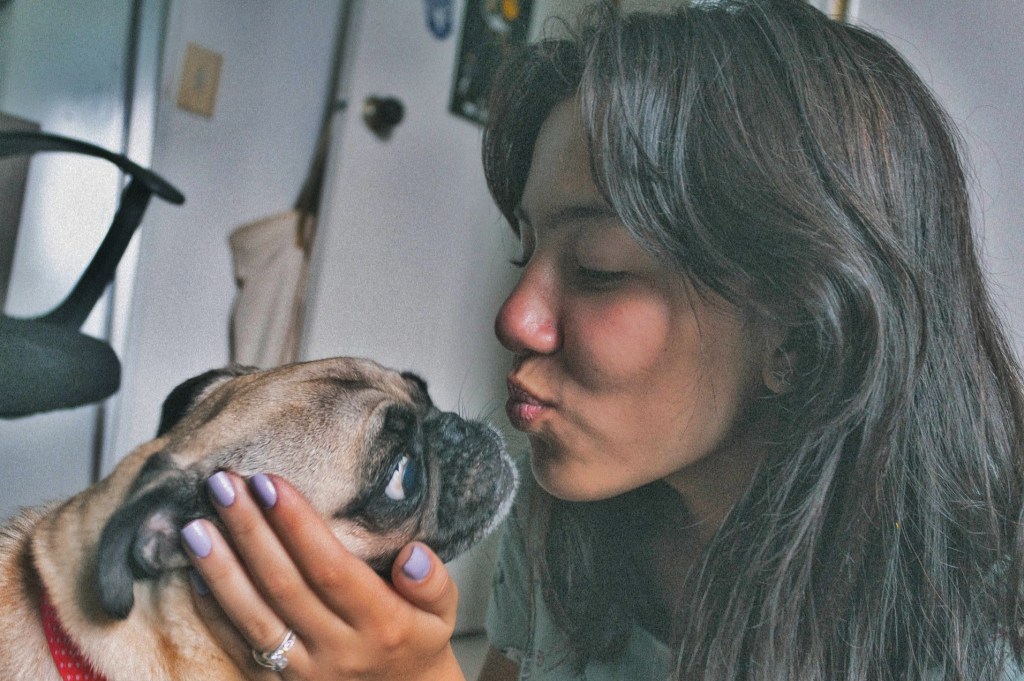
Representative Image (Picture Credit : http://www.unsplash.com)

Days passed. Dev would sometimes oblige Zico by taking him for a walk and sometimes not. As Dev would shut the door while going out alone in the evenings, Zico would protest strongly by barking. Zico would then go to the balcony and watch downward helplessly as his master would walk down the road in front of the building or drive away on his bike.

One day, Zico looked down to see something completely unexpected of his master. Dev had the pug in his lap and the girl they met on the lift that day stood beside him, giggling! A few days later, Zico saw her again in a nearby park, where his master took him for evening walk. The girl also came to the park along with her parents and her pet. As her parents were away for a walk, the girl secretly waved at Dev raising her hand only by half. Dev smiled and waved back at her, mimicking her way of it, which made her almost burst into laughter. Zico felt his master was now friends with this girl, so he should treat her as someone of his own and not as a stranger.

Srilekha came to know from newspaper one morning that a dog park had been inaugurated in the city. She suggested to her husband, ‘Zico is getting bored. Dev does not care for him much nowadays. Why can’t we take him to the dog park? All of us will enjoy!’

Zico was in the dog park a few days later along with Srilekha and her husband. He was surprised to see so many of his ilk there – Labrador, Bulldog, Pug, Dalmatian, Indian Spitz, Dachshund and Doberman. He felt like chasing them all and send them out of the park. But then he met a German Shepherd – a female one. His usual aggression gave way to tenderness and love! He sniffed at her and rubbed his body with hers as their masters stood appreciating their new friendship. She ran playfully, inviting him to follow her, and Zico did so with glee. They had to part after an hour of playing in the park, but Zico had a new feeling, a new spurt of emotions which he had not experienced earlier.

In about a year, Zico reconciled himself to the whims of his master though he was quite happy in his outings with him. It was the same routine of taking the lift and going down to the ground floor and then wandering around the streets or playing in the nearby park and coming back home, but he enjoyed it to the fullest. One day, while going out for a walk, they met the girl and the pug again in the lift. Dev greeted her warmly, ‘Oh hi, you’re also coming!’ Then they came closer. Zico looked up to see his master approaching her to plant a kiss on her cheek. The dog kept staring at them and as his master did it, he closed his eyes and looked down as if in acceptance of what the chance meeting a year back had eventually blossomed out into.

It was love of a kind different from what was between him and his master – a kind which he only had a feel of but did not know much about and for which his master was ready to put him aside and make way for himself. It would be wise to make friends with the girl and her pet rather than sulk about their warming their way into his master’s heart. He would now rather be a part of this new spring in his master’s life than protest and invite his wrath, Zico thought.

Cycling in A Park

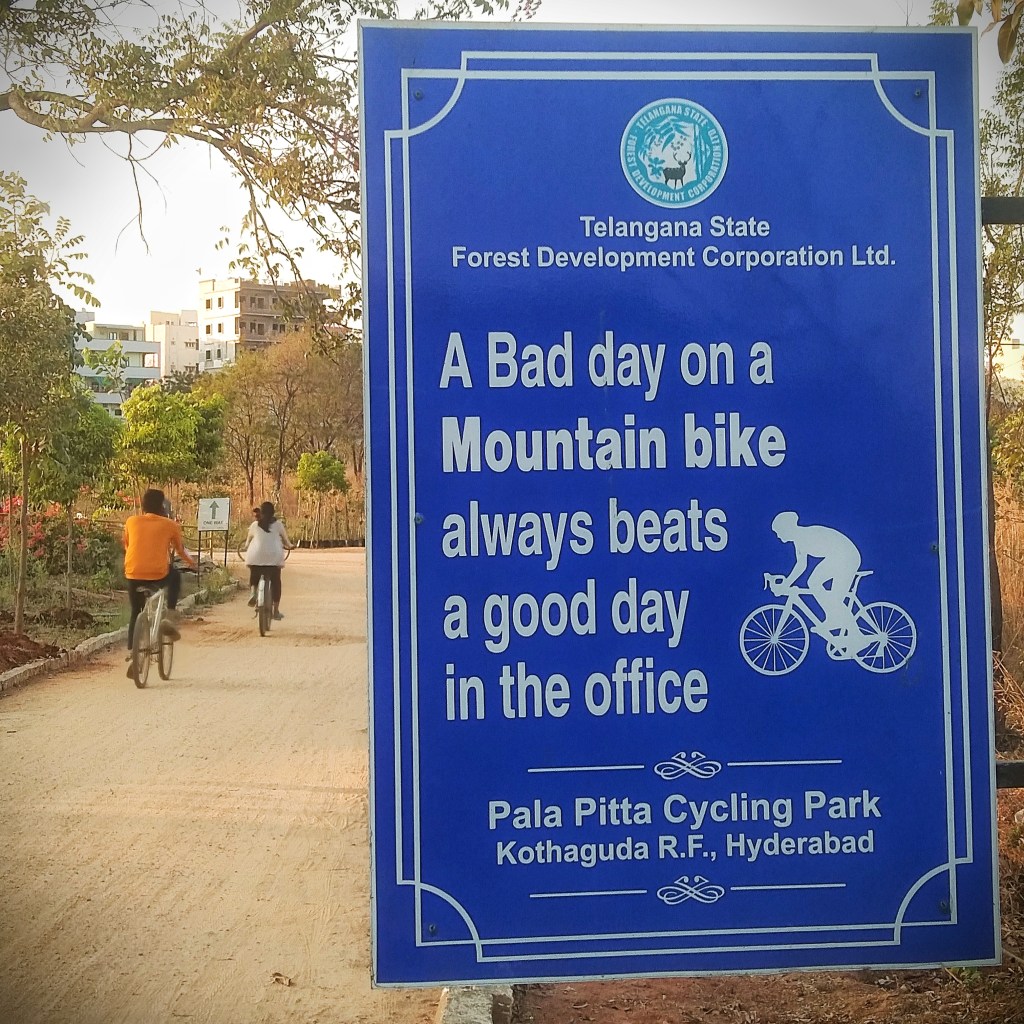
Yesterday I went cycling to Pala Pita Park at Gachibowli, Hyderabad, which has been developed exclusively for bicycle rides. A park for cycling has two admirable aspects about it – firstly, the park itself that offers lung space and a pleasing sight to our eyes, and secondly, the cycling that exercises our muscles and refreshes our mind and spirit.

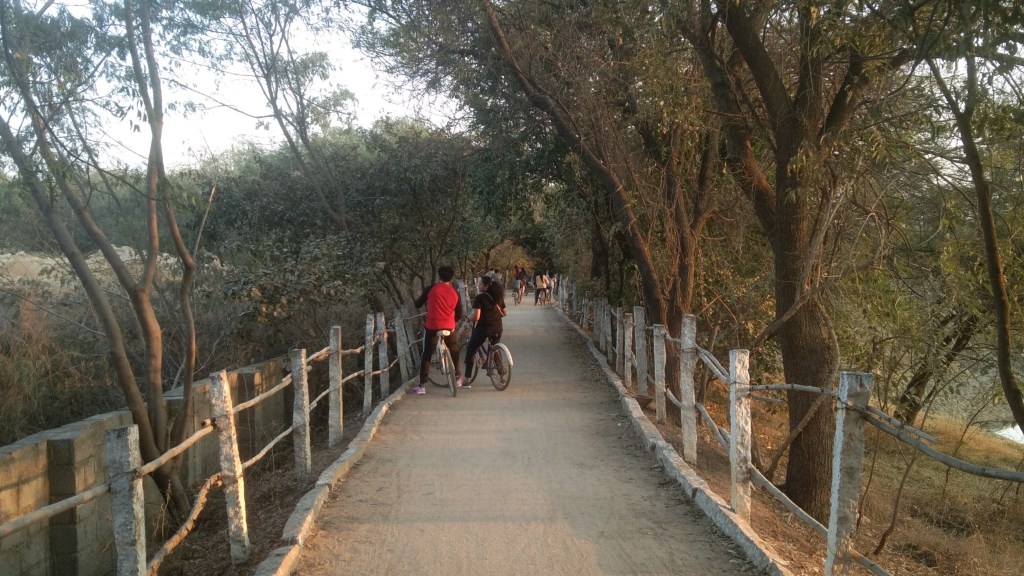
Inside Pala Pitta Park

Pala Pita Park has both of them in equal measure. Cycling tracks wind their way through trees and bushes, and seem to take us deep into the unknown. The long paths without any traffic and the excitement of the fellow riders inspire one to keep on pedalling till the time it is dark and the park authorities blow whistle for visitors to leave the park. By that time, the body gets exercised, and mind become de-stressed.

Bicycles are available on rent from the park office. I hired one of them and went for the ride. The tracks are undulating as usual for the terrains of the Deccan Plateau, making the ride more enjoyable. While riding, I could hear the birds chirping in the trees and see peacocks roaming around the open spaces of the park. I stopped at the turnings and took a few clicks on my mobile camera.

Then the ride also reminded me of the days in my boyhood when my legs would be itching to go cycling every afternoon. I was born and brought up in a village in Jalpaiguri district of West Bengal. I would cycle along the village paths bifurcating the agricultural fields and the road that connects my village to the National Highway. I went from one end of the road to the other and did the same over and over till the time the Sun was setting and it was time to return home. But I never really felt tired of cycling.

In those good old days, there were not so many bikes and cars as we see in the streets nowadays. Very few could afford expensive vehicles and people mostly used bicycles. And there were two or three brands of bicycles – Hero, Hercules and Raleigh. The design was just plain and simple with straight cross bar and the handle bent inward. People used bicycles for going to office or market, making short trips and carrying goods. My private tutor used to ride to our home on a bicycle. The tinkle of bells indicated to me that he arrived.

Inside Pala Pitta Park

Nowadays newspapermen, milkmen and postmen still use bicycles as they ferry newspapers and milk packets or deliver letters to people’s houses. It is convenient for them to move through the narrow paths and alleys, and to mount, ride and then dismount within short distances. But with economic progress, people now have bikes and cars. The streets are owned by cars and bicycles are very rare in the roads in cities or even villages. If one wants to cycle for nothing but just exercise, they have to use the extreme side of the road, intimidated by the large vehicles.

The saving grace is that people today are health conscious and have taken to regular exercises in a big way. While bicycles are not used much for commuting or going to market, youths or even middle-aged people can be seen setting off early in the morning or late in the afternoon on the less crowded roads, wearing helmets and they ride long distances for pleasure and exercise. What was a necessity once for day-to-day activities now has to be nurtured as a passion for exercise.

As for myself, I still enjoy cycling but not amidst the din and bustle of the city’s roads. Ideally, I would love to cycle on a village path or a park like Pala Pitta undisturbed by the noise of traffic or the fear of being hit by a bike or a car. For me, it is as enjoyable as boating in a lake or swimming in a pool.